• Skip to primary navigation
  • Skip to main content
  • Skip to primary sidebar
  • Skip to footer
primary logo for two rivers roofing inc.

Two Rivers Roofing, Inc

Roofing at Its Best!

  • Home
  • Services
    • Residential Roofing Sacramento
    • Commercial Roofing
    • Roofing Inspections
    • New Roof Construction
    • Roof Repair Sacramento
    • Re-Roofing Company Sacramento
    • Commercial Roofing Sacramento
    • Seamless Roof Gutter Replacements
    • Roofing Materials
    • better shingles to keep roof cool
    • shingle roof in sacramento valley perfected
    • multi angle roof with new shingles
  • Locations Served
    • Roofing Contractor of Sacramento
    • Roofing Contractor of Carmichael
    • Roofing Contractor of Roseville
    • Roofing Contractor of Folsom
    • Roofing Contractor of Granite Bay
    • Roofing Contractor of Rocklin
    • Roofing Contractor of El Dorado Hills
    • Roofing Contractor of Loomis
    • Roofing Contractor of Truckee
  • Roof Maintenance
  • Gallery
    • Video Gallery
  • Blog
  • Contact Us
  • Show Search
Hide Search
You are here: Home / Safety / Preparing your Home for Fire Season

Preparing your Home for Fire Season

January 14, 2025 by Mario Cano

Roof Vulnerabilities and Protection Strategies

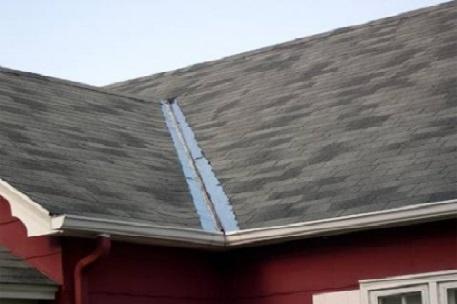
The roof serves as the primary shield protecting a structure from external elements. However, its expansive surface area makes it highly susceptible to fire hazards, particularly from embers. Vulnerabilities are often present at roof-wall intersections, edges, skylights, and vents, where debris accumulation can lead to ignition. Complex roof designs—such as those featuring dormers or split-level structures—introduce additional risks that require specialized attention. In particular, roof edges and intersections are prime areas of concern and should be prioritized in fire mitigation strategies.
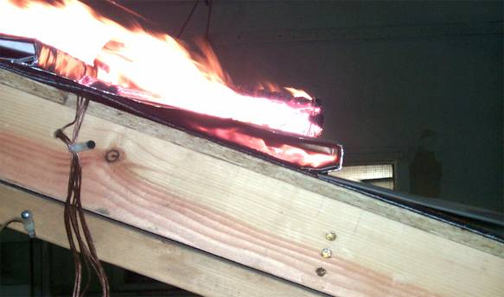
Effective Roof Protection Methods

Given the variety of roof designs, it is essential to tailor protection measures according to specific roof components. Below are key areas of vulnerability and corresponding recommendations for improving fire resistance:

Example
Vulnerabilities

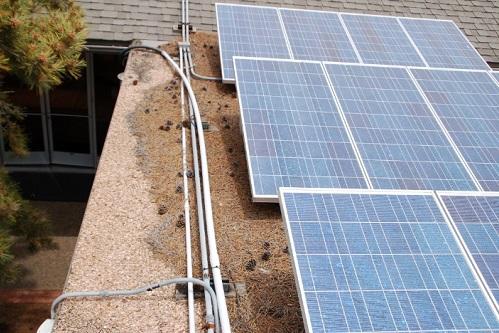
Roof edges and intersections are prone to ember exposure due to debris accumulation in gutters or gaps between roofing materials and sheathing.

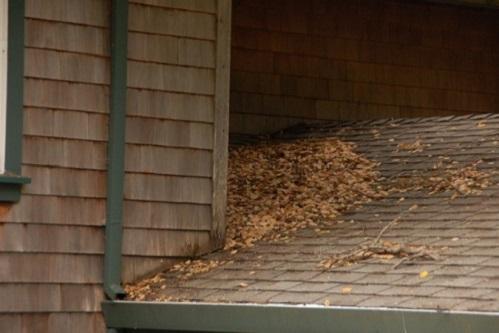
Valleys, formed by two different roof slopes, can collect leaves and debris, particularly if they are open or improperly sealed.

Recommendations

Keep gutters clean of debris (see gutters section for more information). Repair damaged areas along roof intersections and install metal flashing  in vulnerable areas (e.g. roof fascia).

The fire resistance of valleys can be improved by installing metal flashing (incorporating a mineral-surfaced cap sheet into the assembly). Metal flashing can be avoided with Class A asphalt composition shingles by interweaving the shingles (closed valley).
roof maintenance checklist

Dormers create roof-to-wall intersections and can cause accumulation of leaves and debris in these areas.

An underlayment of fire-rated gypsum can increase the resistance to flame penetration (type X is a common gypsum board for this application). Protect intersections with metal flashing. Careful installation is crucial to avoid water damage.

Understanding Fire Ratings for Roofs

Fire ratings for roofing materials are based on standardized tests that assess three key fire-related characteristics: 1) resistance to attic fire spread, 2) resistance to flame spread across the roof surface, and 3) the production of burning embers.

Class A roofs offer the highest protection against fire and are the preferred choice in wildfire-prone areas. Materials such as fiberglass asphalt shingles, metal roofs (e.g., steel or copper), and ceramic tiles fall under this category.
Class B materials, including fire-retardant treated wood shakes and shingles, provide a moderate level of protection.
Class C roofs, such as those made from recycled plastic, rubber products, and aluminum coverings, offer minimal protection but may meet Class A standards with additional underlayment.
Certain roofing materials require supplementary components to achieve fire-resistant ratings, referred to as “by-assembly” ratings. For instance, materials like fire-retardant treated wood shakes or aluminum roofing can achieve a higher fire resistance when combined with specific underlayment layers. Testing protocols are outlined in ASTM Standard E-108, UL Standard 790, and NFPA Standard 276.
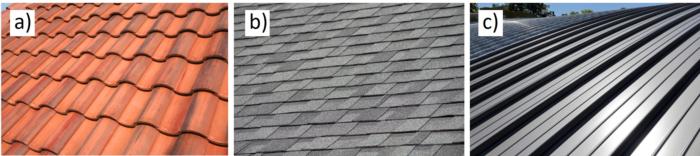
roof materials to inspect

California Fire-Resistant Roofing Standards
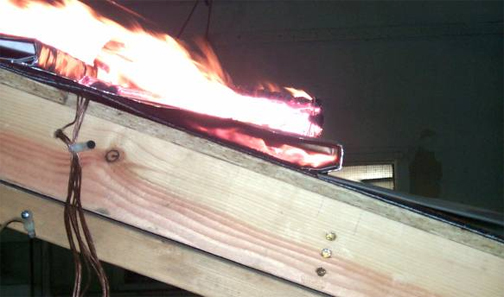
fire ratings

As per Chapter 7A of the California Building Code, roofing assemblies must be designed to prevent the intrusion of flames and embers. Specific guidelines include:

Roof assemblies must comply with manufacturer installation instructions and include fire-resistant materials where there is space between the roof covering and decking.
Flashing in valleys must be made of galvanized, corrosion-resistant metal, and be coupled with a mineral-surfaced nonperforated cap sheet.
Local regulations may vary, and it is advisable to consult with local authorities for additional requirements. Products and systems compliant with Chapter 7A can be found in the WUI Product Handbook, which lists materials tested to meet ignition-resistant and non-combustible standards.

By implementing these comprehensive fire mitigation strategies and adhering to local regulations, homeowners can significantly reduce the risk of roof ignitions in wildfire-prone regions.

author avatar
Mario Cano Founder/ Sr. Developer
Web Designer and SEO Marketer for over 10 years specializing in the Home Services market.
See Full Bio

Filed Under: Safety Tagged With: $fire-proof

Primary Sidebar

Recent Posts

  • Roof Maintenance Services: What to Expect from a Professional
  • Roof Inspection for Insurance: What Homeowners Need to Know
  • How to Spot Storm Roof Damage
  • Roof Leak Repair Cost: What to Expect
  • Storm Damage Roof Repair: How to Protect Your Home After Severe Weather

RSS Roofing Articles

  • More States Add Construction Jobs as Labor Crunch Persists
    Construction employment grew in 27 states and D.C. over the past year, with 31 states adding jobs in September, according to new AGC data.
  • Leading Through Change: SOPREMA’s Perspective on Roofing in 2026
    SOPREMA US CEO Tim Kersey shares his observations on what the coming year holds for the manufacturer and its customers.
  • Best of Success 2025: Talking Culture with Clarity
    Roofing contractors celebrate culture, leadership, and problem-solving at RC’s signature annual event in Arlington, Texas
  • Study Finds AI Now Embedded in 60% of Warehouses
    A study from MIT and Mecalux shows AI is transforming warehouse operations, with advanced automation now driving enhanced fulfillment, accuracy, and labor productivity — giving roofing distributors a new blueprint for scalable growth.
  • Gulfeagle Supply Announces Leadership Transitions
    In its latest leadership development, Gulfeagle Supply has appointed a new vice president of vendor relations as the current VP steps away from the organization.
  • Siplast Gives Arkansas Teens Hands-on Look at Roofing Science
    Siplast welcomed 11th- and 12th-graders from Arkadelphia High School back to its 12,500-sq.-ft. RISE Center on Nov. 13 for hands-on demos and a behind-the-scenes look at research, testing and manufacturing—including wind-pressure and high-velocity hail testing.
  • Nations Roof Partners with California’s State Roofing
    Nations Roof LLC has formed a strategic partnership with San Leandro-based State Roofing Systems, bringing together the roofer’s 40+ years of California market expertise with Nations Roof’s national resources, safety programs and 24/7/365 service center. 
  • Tech Talk: AI is Reshaping Roofing Distribution
    The rapid development and adoption of AI in the roofing industry are drastically changing how companies operate. Learn how distributors are effectively using AI and why adopting it is essential to stay competitive.
  • Roofer Detained by ICE at the U.S. Border
    RC Publisher Jill Bloom reflects on a roofer friend’s first-hand encounter with stepped-up immigration enforcement at the U.S. border.
  • Construction’s Split Signal: Big Builds, Soft Demand
    October’s construction starts posted headline growth, but the gains were concentrated in a small number of megaprojects. Outside of those high-value builds, activity softened, and the industry’s labor picture dimmed further as job openings and hiring indicators pointed to ongoing contraction heading into 2026.

Recent Comments

No comments to show.

Archives

  • December 2025
  • November 2025
  • October 2025
  • September 2025
  • August 2025
  • May 2025
  • April 2025
  • January 2025
  • December 2024
  • November 2024
  • October 2024
  • August 2024
  • June 2024
  • January 2024
  • December 2023
  • October 2023
  • July 2023
  • June 2023
  • May 2023
  • April 2023
  • October 2021

Categories

  • Commercial Roofing
  • Insurance Issues
  • New Roof construction
  • Re-Roofing
  • Residential Roofing
  • Roof Inspections
  • Roof Maintenance
  • Roof Repairs
  • Roofing Materials
  • Safety
  • Uncategorized

Footer

Locations:

Two Rivers Roofing, Inc- Sacramento
6771 Ferrier Ct Sacramento, CA 95822
(916) 752-2740
Two Rivers Roofing, Inc.- Roseville
3017 Douglas Blvd suite#300 Roseville, CA 95661
(916) 752-2740

Resources:

ABC Supply
Owens-Corning

Insured and Bonded
CSLB#1032317
C-39

Links:

Todays Homeowners

Best Roofers Hub

SiteMap

Social-Media:

Two Rivers Roofing, Inc

© 2025 All Rights Reserved | Two Rivers Roofing, Inc.
SEO Expert Sacramento

  • Home
  • Blog
  • Video Gallery
  • Contact Us